Viewers could see what the internet was saying about the show they were watching, in real time, without leaving the app.
By 2013, the second screen was already happening — people were tweeting, messaging, and reacting while they watched. Broadcasters had no way to capture that energy or feed it back into the viewing experience. The conversation was happening around the content, but not with it.
Beamly built the bridge. A platform that detected what was on screen, matched it to live social conversation, and gave both broadcasters and viewers a surface to engage with content in real time. I designed the consumer-facing product across its full lifecycle — from early 0→1 concepts through to a platform that reached 12 broadcast partners.
We were designing for two completely different audiences — and both had to find it useful before the other one would join.
Broadcast producers needed a tool that would help them understand how a show was landing, in real time, during the broadcast. Viewers needed something that enhanced the experience of watching — not interrupted it. These are not the same product. Getting both right, inside one platform, required holding two very different mental models simultaneously.
The underlying technical challenge — content detection, social matching, real-time surfacing — was also being solved for the first time. We were designing ahead of infrastructure that didn't fully exist yet.
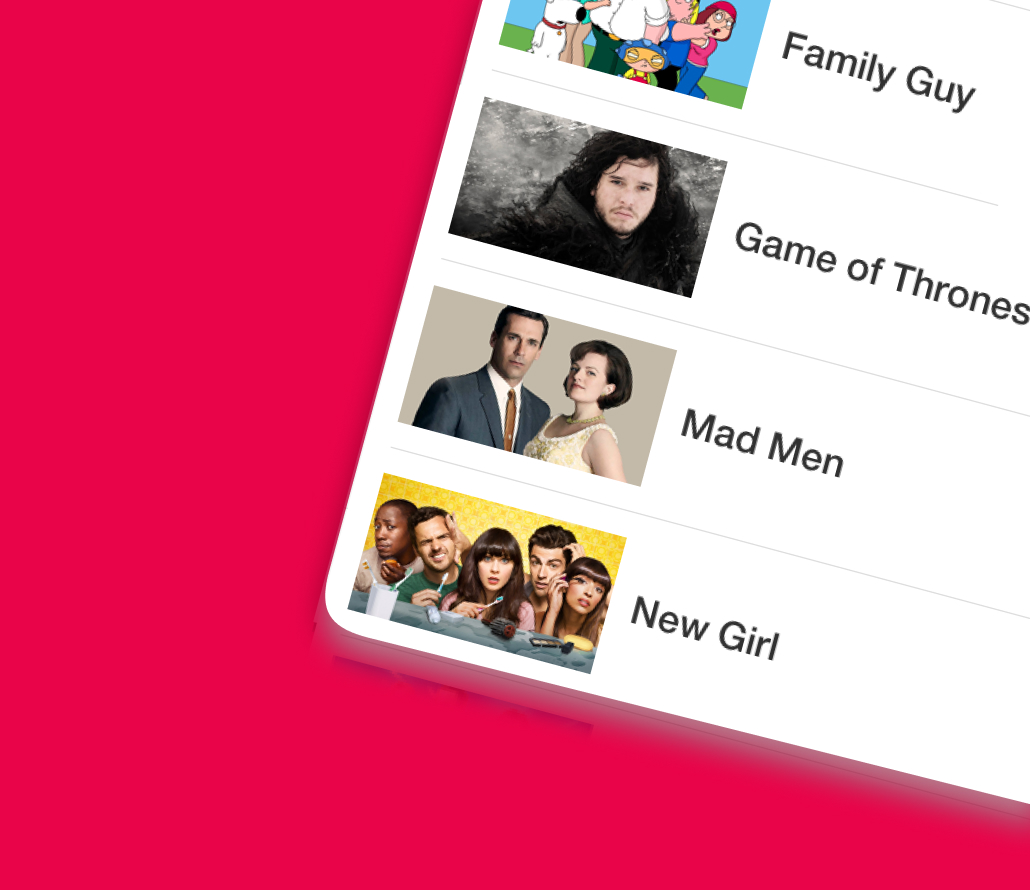
Producers could see their audience's reaction to a plot twist before the next scene had started. Viewers could find the conversation about their favourite show in seconds.
The producer dashboard surfaced trending moments, sentiment shifts, and audience spikes in a format designed for the broadcast control room — where every second matters and cognitive load is already high. The viewer interface was designed for the sofa: discoverable, low friction, and additive to the watching experience rather than competing with it.
The platform shipped as both a consumer app and a broadcaster API. That dual-surface approach — one product, two very different entry points — was itself a design decision that shaped the entire architecture.
I was the first designer in an engineering-led company that had shipped products for three years without one.
The credibility question was immediate: why does this team need a designer now? I answered it by starting with the smallest, most visible problem — the internal broadcast tool UI — and fixing it fast. Within six months, design reviews were part of every sprint. Within a year, I had hired a second designer and established the team's first design process.
The lesson was about sequencing, not influence. You can't change a culture by arguing for it. You change it by demonstrating the difference.
Beamly was acquired by Coty in 2014 as it scaled to 12 broadcast partners — a validation that the category was real, even if the timing was early.
The second-screen space didn't evolve quite as fast as the market expected in 2013. But the core product insight — that social conversation around broadcast content had commercial value — proved correct. The acquisition demonstrated that broadcasters and brands would pay for that connection. The design work I led during this period became the foundation for Booster, Coty's social advertising platform, built on the same infrastructure years later.
The product worked. The market timing didn't — and there's a version of this story where that's a failure. I don't read it that way.
Beamly established that social conversation around TV was a valuable and designable space. It was early, not wrong. The acquisition proved there was real intent behind the idea, even if the consumer behaviour hadn't fully caught up yet. Working on a product that was ahead of its moment taught me more about market timing and product sequencing than any successful launch could have.